When most companies think about audio branding, they picture a short jingle at the end of an ad. With eBilet we decided to take an entirely different route.
As Soundize Audio Branding, we were asked to build a complete sonic identity for the largest ticketing platform in Poland. From the start, though, we knew we did not want to make yet another corporate audio logo. We wanted to find the moment where the brand truly meets the emotions of its users.
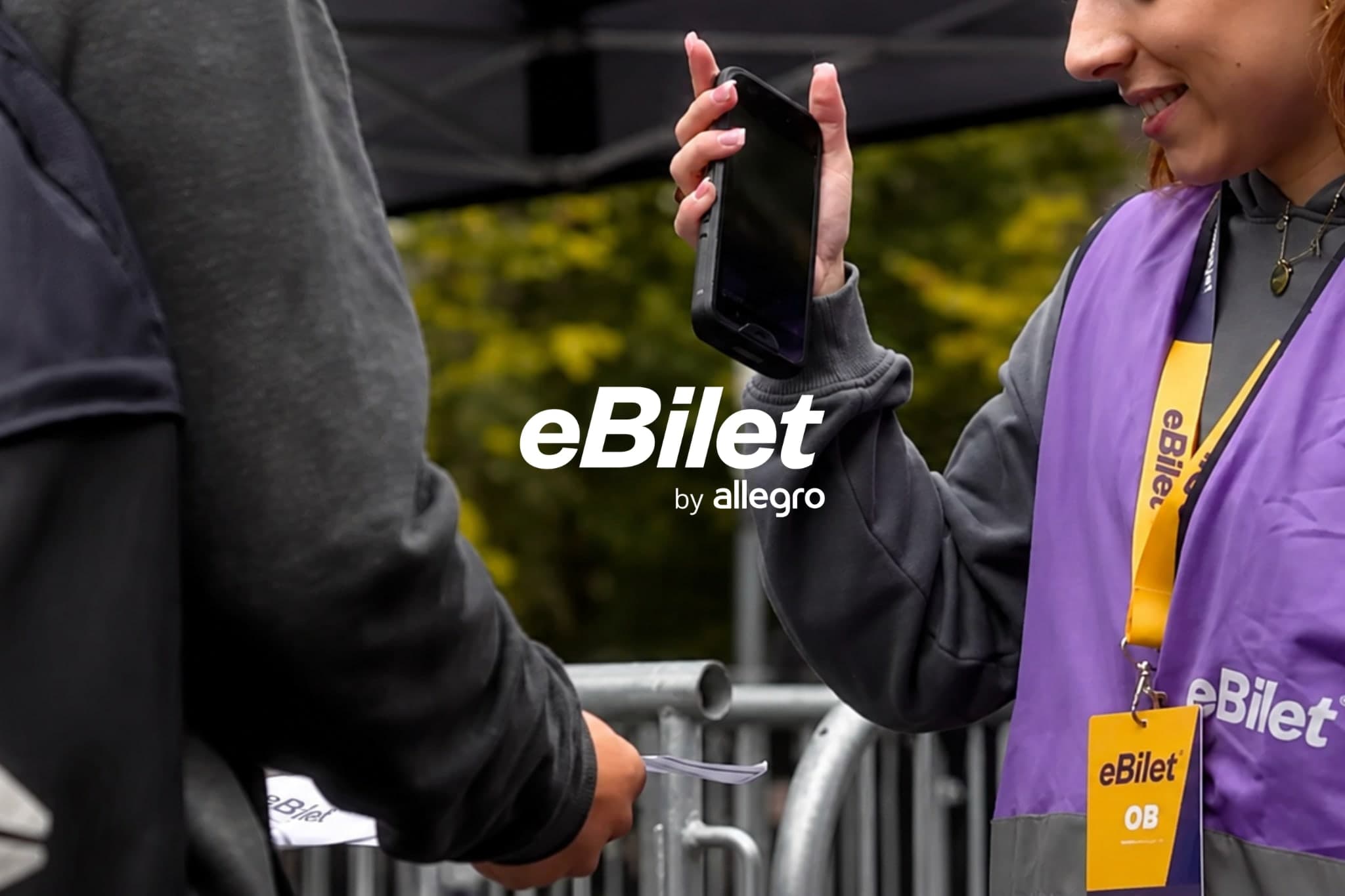
During strategy workshops with the eBilet team we discovered something interesting. One of the most emotional moments in the entire customer journey is the instant a ticket is scanned at the entrance to an event. That is when anticipation turns into reality. That is when a concert, a festival, a match or a show stops being a plan and actually begins.
That is why the foundation of the eBilet audio branding project became not a commercial, but the eBilet scanner sound. And that is why we called the whole project "Sonic Gateway".
Sonic Gateway - a sonic entrance to the world of events
Our goal was to create a sound that not only confirms a ticket has been scanned correctly, but at the same time signals to the user that they are crossing the border between the digital world and the world of real emotion.
That approach made eBilet sonic branding part of the user experience rather than a marketing add-on. This is exactly the difference between a jingle and a brand sound system.
How the eBilet sound was made? Ty-Ty-Ry!
At the heart of the whole sonic identity sits a simple three-note motif built on the rhythm of the name "e-Bi-let". While designing it we cared about several things at once: a melody that is easy to remember, one you can hum after a single listen, recognisable in a noisy environment, and usable in both advertising and UX systems.
That is how the eBilet jingle was born, and it became the basis of the brand's entire Audio DNA system.
The eBilet audio logo has two main layers. The first is a set of distinctive electronic signals inspired by the work of ticket scanners. The second is melodic, humming-like vocalises that resemble the human voice. The electronic layer represents the technology behind the eBilet platform, while the vocal layer stands for the emotions, the people and the experiences of attending live events.
Why does the eBilet scanner sound work at mass events?
One of the most interesting parts of the project was the psychology of how we perceive sound. In designing eBilet sonic branding we drew on a phenomenon known as the Cocktail Party Effect - the mechanism that lets a person pick out and, in a sense, "turn up" a particular audio signal in their head, even in a very loud environment.
It is the same reason we can hear our own name at a concert or a festival despite thousands of other sounds. In building the eBilet sonic identity we used that same mechanism.
The three-note motif was designed to stay recognisable even in the noise generated by thousands of event-goers. In practice that means the sonic branding does more than a marketing job - it does a functional one. It helps attendees intuitively identify entry points and find their way around large event spaces.
It is also proof of how far a well-designed sound design reaches - far beyond the commercial break.
eBilet music that gets people off the couch
In creating the eBilet music we did not want to talk about the events themselves, but above all about the impulse that makes a person buy a ticket and leave the house.
So the whole system was built around the idea of movement, energy and urban adventure. We chose a tempo of 126 BPM - faster than typical pop, but more approachable than club music. It is a tempo that naturally invites movement and builds a sense of anticipation.
The end result of our work for eBilet is a complete audio branding system covering in-app sounds, UX sound design, advertising, social media, podcasts and the brand's future music projects. eBilet gained not just its own sound, but a coherent sonic language that will grow with the brand for years to come.
You will find the full case study in our work, and we describe how a project like this unfolds in the post on what the audio branding process looks like.
The Sonic Gateway system has since earned international recognition too - in 2026 it won the Winner award in the Audio Branding category at the International Sound Awards 2026.
In a world where it is ever harder to stand out visually, audio branding is becoming one of the strongest tools in multisensory marketing. Sound brings "dead" touchpoints to life and builds an emotional bond you cannot switch off with a single click. You can close your eyes - but you cannot close your ears. Brands that understand this gain an edge the competition will not be able to copy for a long time.